
Thoughts from the Principal of the Oxford College of Garden Design
Tuesday
Monday
Colour In The Garden
Does And Don't On Designing with Colour

Drive through any town or suburb and you will see many
plantings that apparently aim to include every possible colour imaginable, all
crammed together, with no thought at all for harmony, balance or indeed the colours and forms of
the adjacent or surrounding buildings.
You wouldn't buy a carpet in such a riot
of colours, but colour sense often literally flies out of the window when it
comes to exterior colour schemes.
As a very general rule, the more bland the architectural
backdrop the bolder your colour scheme can be and vice versa. If , for example
the building is a shade of grey, bright colours will work in your scheme.

New
red brick is a difficult foil for successful planting because the strong colour
of the brickwork dominates whatever is
close to it – and in a small garden that includes everything. Your course will teach colour theory, but even without that knowledge you should be able to recognise that purples
and vivid reds simply do not work against brick, even when if it is aged and
weathered.
Softer colours – pale yellows, cream, grey-greens and light blues look much better. Why? Because they
are cooler and complement the brickwork
rather than fighting it. Light peach, pink and apricot also work against red
brick, being watered down versions of the brick colour itself. However these
colours are more tricky to carry through into a broader planting scheme.
Even small changes of colour in your client's garden can make
a positive difference. Paint a plain garden shed , garden office or summer
house in an exact match or tone of one of the colours you will be using in your
planting plan.

It will immediately integrate into the overall scheme and look
cool and sophisticated. Likewise any timber structures such as fences, timber
seats and arbors will last longer and
act as a much more pleasing backdrop to planting if they are painted in soft
earthy colours such as a clay grey, slate blue or sage green.
For ideas try studying Farrow & Ball or
Fired Earth colour cards, both of which contain colour ranges that are ideal
for use in the soft light of the United Kingdom and other northern countries. The
vivid colours that work so well in the bright light of the Mediterranean or California are less
successful further north, with the exception of
some ultra modern inner city gardens.
Colours can be mixed and matched in a variety of finishes
such as exterior eggshell. There are several commercial wood stains and paints
available but be careful – unless you
are seeking a bold and vibrant effect some are still not subtle enough for use
over large areas and may need to be mixed or thinned.
Avoid gloss paint, it gives too sharp and
shiny a finish - and don't use a spray
gun as it may dribble through to the neighbouring side of the fence and cause a
dispute for which you don't want to be blamed!
More thoughts on colour in the garden will follow in future
blogs. In the mean time tell us what colours you like and dislike in the garden.
Article by Sue Hook
Article by Sue Hook


Tuesday
Designing For Wildlife
Creating a Balance of Horticulture and Ecology

The enemies of wild life gardens are mainly
domestic: cats, dogs and indifferent
humans who may have no interest in preserving a balanced eco-system. However wildlife gardens have enormous educational value for adults and children as long as
nature is not allowed to reclaim the entire garden.
Explore ideas with your clients.

Even if they are initially cautious it should be possible to have them agree to create at least one small
wild area within or at the edge of the garden. Start with one or more small
areas of lawn in a sunny or only partially shaded site. Inscribe a small circle, rectangle or square
of grass, in scale with and set inside the larger area of lawn.
Ensure the
mower can be comfortably manipulated around and between the shapes. Avoid
making it too busy, but if the lawn is large you might create a pattern of,
say, four neatly edged squares, or three circles of grass to be left to grow to
a maximum of 8 or 10 cms taller than the
remaining lawn.
These will quickly yield low-growing wildflowers such as
self-heal, a variety of grasses, daisies and buttercups. Even a tiny area will
attract bees and hoverflies. Visually it
will provide a change of rhythm to the close-cut, uneventful lawn space. Be
ruthless in removing invasive weeds such as docks and hogweed.

After they have set seed the mini wildflower
areas can be lightly mown, with the mower at its highest setting and then
retained as neatly defined areas of rough grass with late spring flowering
bulbs allowed to follow through. This introduces an entirely different look,
which is not wild but works well through late spring and early summer before
the grasses start to grow vigorously.
Plant short-stemmed tulips - I like to use a single colour - dotted
throughout the rough grass. Spring gales can easily snap the longer stems of
tall varieties and as they die down the leaves of taller plants are more
noticeable and unsightly. White, or pale yellow narcissi also look wonderful
scattered through rough grass.

Experiment. Plant mid-height nectar rich
flowering plants as plugs, ensuring continuity of food supply for insects. If
your clients prefer the grass to revert to normal lawn height the rough grass can
simply be mown and should quickly recover its normal colour with a little
general fertiliser added.
Wild flower habitats will be populated
surprisingly quickly by beneficial insects such as bees, ladybirds, hoverflies
and lacewings, butterflies, moths, small mammals and birds that will eat some
snails and slugs. If water is a part of the plan it will increase the range of
wildlife considerably, with the potential to attract amphibians such as frogs
and newts, exotic-looking dragonflies and even kingfishers.

Insect 'hotels' are readily available, but a
small pile of logs will do just as well. Leave a small patch of nettles in a
sunny corner, where a variety of butterflies can lay their eggs. Bird and bat
boxes will be used, as long as they are sited where local cats cannot reach
either the boxes or nearby bushes that provide initial safe resting places and
shelter for fledglings.
A wildflower meadow is a bigger undertaking and
is the subject of a future blog, together with suggested wild flowers to
include.
Article by Sue Hookwww.suehook.net
Article by Sue Hookwww.suehook.net
Sunday
What Is A Garden?

The Garden Defined
This question is so fundamental to learning
about design that it is worth looking at the instant image in your mind's eye
of a garden. I believe that on this design
learning curve you will shed many of
your pre-conceptions and open your mind and your eyes to a myriad of new
and exciting possibilities.
Gardens have been created all over the world for many hundreds of
years, arising from many different cultures. They have served and continue to
serve a multitude of purposes including
the provision of shade, cool air and the conservation of water in desert climates, as an expression of
wealth and opulence, as a place of contemplation and meditation, a restorative
space, a means of providing food and increasingly as an extension to the living
space in the home, incorporating some or all of the above.
 |
| Alhambra, Grenada |
A garden can be any exterior space that has
been made by humans rather than occurring naturally in the landscape. The
famous American garden designer Thomas Church observed that gardens are for
people. In essence, gardens demonstrate man's ability to impose order on and
thereby control nature.
A garden is always artificially contrived, whether or
not it attempts to recreate nature and even if it uses entirely natural props
such as plants or boulders, because these are selected, chosen for inclusion. It may use entirely artificial materials to
achieve the ambience and style desired by its maker.
Or it may redefine an
existing natural landscape, manipulating and enhancing it with the lightest and
most sensitive of touches. It may be
high on a rooftop, deep in a gulley, in the middle of a desert, on a housing
estate, or on a beach. It may be formal,
contemporary, naturalistic or traditional.
 |
| Derek Jarman's Dungeness garden |
It may be wholly or partially contained and
does not necessarily need to include plants, depending on its function and
aims. There is no minimum or maximum size to qualify as a garden. It can be
made on a tiny balcony, or in a miniscule courtyard (even in a stairwell, with
some light).
Or it may comprise several acres of managed and cultivated land.
It will frequently reflect the ethos, aspirations, interests, priorities,
culture and lifestyle of its owner.
 |
| Ian Hamilton Findlay's Scottish Garden |
There is no limit to the possibilities for
interpretation of the notion of a garden.
It may be well or badly designed, more or less pleasing aesthetically or
functionally, but it is still a garden, very often crying out to be rescued with
the help of an empathetic and sensitive designer. We can explore later how
important your contribution will become.
A garden may have multiple uses or a single
purpose for its existence.
 |
| Topher Delaney roof garden |
The successful realisation of any garden
depends significantly on its aspect, soil conditions and position. It may be
dry, damp, wet, shady, sunny, exposed, or all of these things. A well-designed
garden draws on every factor and turns them to advantage wherever possible,
accentuating the positive and minimising (sometimes eliminating) the
negative.
Every garden is completely unique in its
aspect, soil conditions and position.
A garden can evoke many moods. It may be
relaxing, calm and peaceful, exciting and vibrant, mysterious and
thought-provoking, witty and humorous.

The role of the designer is to make the
absolute most of a given space, whilst being realistic about its possibilities,
its limitations and potential costs, carefully respecting the client brief
while guiding your client towards the best possible outcome.
That will usually delight him or her as you
will be introducing ideas and solutions that they never would have thought
possible. The making of a garden is a challenge. It is not easy but it is
always exciting and you will never stop learning.

Gardens may aspire to recreate to scale
elemental natural forms such as mountains or waves, or they may, less grandly
provide a more intimate oasis of tranquility away from the bustle of the city,
the buzz of traffic and the tensions of workaday life.
An area of lawn edged by
flower beds, a brown, timber garden shed in the background, with a bike propped
up against it, some sort of path through the middle and maybe some children's
toys, a football, and a small sitting
space with a table and chairs. The whole contained by fences, hedges or walls.
This is just one of a myriad of examples of what might be thought to be 'the garden fence'.

I think it is exciting to explore and research
how and why gardens have been made and doing so will inform and inspire your
own progress into the amazing and challenging world of garden design.
Article by Sue Hook
Article by Sue Hook
Wednesday
10 Swimming Pool Design Tips
What To Consider When Planning A Swimming Pool

So assuming you have the resources and the space what should
you consider before installing a swimming pool?
1. Firstly, will you use it?

Or at least use it enough to justify its existence. If your
weather isn’t consistently warm and sunny are you hardy enough? Can you be
bothered to drag a cover off the pool every time you want to use it?
2. Have you got the ideal site:

You will also need to connect services the site: water and
electricity. How easy and costly will that be?
3. What will you use the pool for?

This will influence its shape and size. If it is just for a
quick cool-off dip and a focal point to lounge around then a curved or shaped
pool is a possibility.
If you want it for serious swimming exercise then it needs to
be big enough, deep enough and ideally rectangular. This was a major factor that
put me off. A pool less than 15 metres, 50 feet long, is not a good place to
swim.
4. Are you prepared for the cost?

Not only of installation but also of on-going maintenance? Is
that something you are prepared to do yourself, or will you employ the services
of a maintenance company?
5. What will the impact be on the garden?

If visible from the house, will it be dominant and obtrusive?
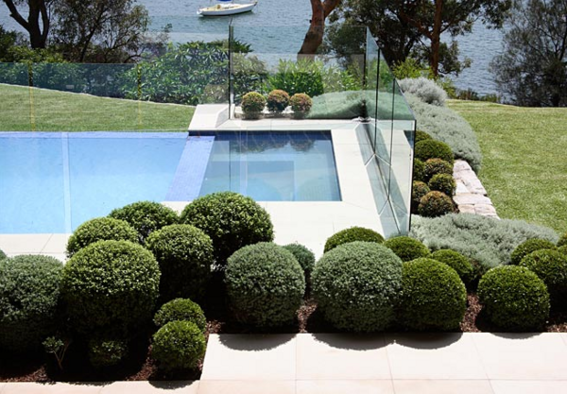
A typical aqua blue swimming pool is pretty startling on a
cold, grey day and looks out of place in a traditional country garden. It may be
more inkeeping in a contemporary or Mediterranean setting.
6. You could consider a pool of a different colour
.jpg)
It doesn't have to be blue. A natural stone, soft terracotta or
clay coloured lining may be far easier to incorporate in your garden design.
Will you use a traditional concrete construction, fibreglass or
one of the various vinyl liners available? These are more frequently used today.
7. Natural or Chemical?

Have you considered a natural freshwater swimming pool or
swimming pond http://www.naturalpoolsuk.com/ ? These are becoming far more
popular.
They definitely sit more comfortably in a naturalistic setting,
but this is not the only possibility. Contemporary designs can be stunning.
No chemicals are used because the water filtration is achieved
by aquatic plants. Much nicer to swim in; the only disadvantage: cold water!
8.will IT impact on the value of your house?

A swimming pool may or may not add value. It can be a selling
point or it can be a disadvantage.
Your swimming pool could put off a buyer that does not want the
bother or cost of a swimming pool.
9. What will be the implications if you change your mind?
Removing or filling in a swimming pool can be as difficult and
costly as installing it in the first place.
You can’t just fill it in and plant in that location. You will
have drainage to consider so the structure of the pool usually needs to be
removed and soil, a lot of it, imported to fill the hole.
10. So, if I haven't put you off

Find yourself a good designer and get a specification sheet
drawn up by an independent swimming pool engineer to include all the plant
machinery and the materials you want to use.
This will mean every contractor will be quoting for exactly the
same thing, otherwise it will be impossible to get a like for like quote.
This one bit of advice alone could save you tens of
thousands of dollars alone.
Consider keeping the pool a constant depth. I would recommend
4ft deep (1.2m) This is deep enough to swim in without scraping your knees and
will halve the cost of your pool both in construct costs and in heating bills.
The only disadvantage to this is that you should have a ‘no
diving policy’ for the kids, but they will soon get over this.
If you want an electronic pool cover you will need to keep the
pool rectangular, but this is also better if you want to use the pool for
exercise and games like water volleyball.
Using a darker colour on a rectangular pool can also help
disguise its use when situated close to the house. If planned well, it can be
designed to look like a formal pond when not is use.
Avoid ‘Roman Ends’ or putting the steps in the centre of the
pool as this ruins the ability to do lengths when exercising. Instead put them
to one side so you can do racing turns without them getting in the way.
Always ask to see examples of contractors previous work in real
life situations and try and talk to other pool owners to share their experiences
before you take the plunge.
Do the contractors belong to a professional body? If they do,
check to see if they are covered by an indemnity policy just in case they go
bankrupt. Some professional bodies cover the cost of finishing the pool for the
original agreed price.
Consider:
USA The Association of Pool & Spa Professionals
USA Florida Swimming Pool Association
UK BSPF | The British Swimming Pool Federation
UK SPATA
AU SPASA | Swimming Pool and Spa Alliance
Finally find an expert you can really rely on to do a good job
and deliver a swimming pool that meets or exceeds all your expectations.
Tuesday
Breaking News RHS Chelsea Flower Show 2014 Medal Winners Announced
Chelsea Flower Show Medals Announced!
Congratulations to the Laurent-Perrier Garden, Best Show Garden, and all the award winners at the 2014 RHS Chelsea Flower Show! I am of course delighted that I called the best in show winner in my MyGardenSchool predictions blog from seeing the show gardens yesterday!
Congratulations to Luciano Giubbilei - well deserved.

Chelsea Flower Show Gardens - Winners
Best Show Garden
The Laurent-Perrier Garden
Designed by Luciano Giubbilei
Best Fresh Garden
The Mind's Eye
Designed by LDC Design

Best Artisan Garden
Togenkyo – A Paradise on Earth
Designed by Kazuyuki Ishihara
Gold Medallists.
- The Homebase Garden – Time to Reflect, in association with Alzheimer’s Society
- The Laurent-Perrier Garden
- The M&G Paradise Garden
- No Man’s Land: ABF The Soldiers’ Charity Garden to mark the centenary of World War One
- RBC Waterscape Garden
- The Telegraph Garden
- All Show Garden awards download (82kB pdf)
- All Fresh Garden awards download (15kB pdf)
- All Artisan Garden awards download (11kB pdf)
Great Pavilion
RHS Chelsea Plant of the Year 2014
Hydrangea macrophylla Miss Saori (‘H20-2’)
Ryoji Irie
Diamond Jubilee Award
South West in Bloom
President’s Award
Birmingham City Council
Best RHS Discovery exhibit
Sparsholt College
All Great Pavilion awards download (114kB pdf)
Technorati Tags: Artisan Garden awards download,Best Artisan Garden,Best Fresh Garden,best in show at chelsea flower show,Best RHS Discovery exhibit,Bronze medalists,Chelsea Flower Show Gardens,Chelsea Flower Show Medal winners,Designed by Kazuyuki Ishihara,Designed by LDC Design,Designed by Luciano Giubbilei,Fresh Garden awards,Gold medalists,Great Pavilion awards download,Great Pavilion RHS Chelsea Plant of the Year 2014,Hydrangea macrophylla Miss Saori,President’s Award Birmingham City Council,RHS Discovery awards,Ryoji Irie Diamond Jubilee Award,Show Garden awards,Silver medalists,Silver-gilt medalists,South West in Bloom,Sparsholt College,The Laurent-Perrier Garden,The Mind's Eye,Togenkyo – A Paradise on Earth,who won gold medals at chelsea,Winners Best Show Garden
Friday
“A Game of Contrast” Former Students win Best Festival Garden 2014, RHS Malvern

This is a blog by former student Ana Mari Bull who along with former fellow student Lorenzo Soprani won Best Festival Garden 2014, RHS Malvern.
How many of us dream of creating a show garden as soon as we graduate, but are put off because of the lack of funding or sponsorship? Years can go by and you get more involved in building up your practice, but the dream is still there, tucked away at the back of your brain, behind the planting plans and construction drawings that need to be finished yesterday. As you take on more work, you can feel the dream becoming more and more distant.
This was how I felt last year; I was up to my eyes in work, so I turned to my friend and fellow student Lorenzo Soprani for help. We worked really well together and it made the lonely existence of a freelance designer more bearable. In turn, he would pass work onto me when I was quiet on the work front. We soon found that we were in fact collaborating on every project we did, so in effect had become one practice. Work started to dry up towards the end of last year and the dream started to wiggle its way back to the front of our minds.

Lorenzo picks up the story here, “It was late in January when my colleague and friend Ana and I decided to have a go at designing a show garden. To be honest I was not particularly busy and it is when the mind is at rest that those ideas spring to mind! But with not much income and no name so to speak to bring in financial backing, the chances of us being able to afford to do a show garden was still very much a distant dream. So having looked around for an opportunity I discovered that the RHS was re-launching the Malvern Spring Flower Show as the “RHS Malvern Spring Festival” and to celebrate that, they were giving away £3000 bursaries to help fund first timers in a new category of show gardens called the “Festival Gardens”. I decided fairly quickly to have a go and the design came very easily as having only 15 meter square to play with, the design needed to be simple. Once all the documents were sent off we did not think about it much, there was nothing to do apart from waiting and luckily for us the office phone was starting to ring again! It was on the 14th of March that we had confirmation that our design had been selected along with 3 others by the RHS panel.

At this point panic started to set in, as I feared that we couldn’t afford to do it. It was only at this stage in the process that we learnt the RHS where only giving us half of the bursary, the remainder would be paid at the end of the show once breakdown had been completed and the site was given the all clear by the organisers.”
With our design accepted so late in the day we had very little time to find the extra funding needed to top up the kitty, but it’s amazing how time pressures can make you focus. Having the RHS backing also helped enlist other sponsors.
The plants, hedges and all the hard landscaping materials were sourced, but we couldn’t find the specimen trees which were key to the design. It was now the last week in March, the end of the bare root season, and still we hadn’t found all of our trees. Finally, Lorenzo got a call from a nurseryman who had tracked down the last three trees from a nursery in Germany. It was the last day of lifting when we received an urgent email: are you taking the trees? All we had to go on was a poor quality photo. Without the trees we didn’t want to continue. We took them, hoping that these skinny looking ugly ducklings would turn into the magnificent swans we needed.
As well as having the RHS bursary, the designers of the Four Festival Garden were mentored through the build by the principal of a major design school in the area. The support and advice we got from her and from Nina Acton, the events co-ordinator for the Three Counties Showground was superb. For first timers, having someone on hand to reassure you is invaluable. The build wasn’t all plain sailing; the contractor who we had engaged to build our small wall didn’t turn up. It was at this stage that the fabled camaraderie which exhibitors say exists between those at the ground became apparent. A landscaper from another garden came over between jobs to build our wall, which he then also rendered for us, before being whisked off to finish the garden he was originally working on. Tools appeared when they were needed and disappeared just as quickly. The elves were at work. As we didn’t have a contractor we did all of the hard landscaping ourselves. I can’t take any of the credit for all the heavy jobs, which Lorenzo undertook as if he had been a professional landscaper for years. I can though, take half of the credit for the pebble path. Neither of us had done anything like this before. Having failed to find a video on YouTube on “how to build a show quality pebble path” we just got stuck in. Ignorance, as they say, is bliss. The plants arrived on the Wednesday afternoon; it took us all day Thursday to place them and then the Friday to plant them up. We were on schedule. The plants had time to naturally reposition themselves before judging on the Wednesday and we were able to primp and preen to our hearts’ content. We were more than lucky with the weather during the build; the week of the show was quite something else, and judging took place in torrential rain and extremely high winds. Malvern is windy at the best of times, but this was excessive. From eight in the morning until nine at night we waited, wet, cold, and buffeted by the wind, for the medal announcements. Luckily one of the larger show gardens had built a sunken dining area with a pizza oven which had been burning all day, so as the evening drew to a close we all huddled together to keep warm. When the results finally came in, just after 9.00pm we were too tired to take it all in, as all we wanted to do was go home to a hot bath. The wonderful thing about RHS Malvern was that the next day, two of the judges came round to each of the gardens to talk through why we received the medal we did. This was so helpful. They were really engaging and very generous in their comments. We learnt a great deal as to how the panel think!
If anyone is thinking of taking their first steps into the world of show gardens, then RHS Malvern is the place to start. The support is fantastic, the setting is beautiful and the experience is very rewarding… Though now we’re hooked and can’t wait to do another one!
Don't’ forget to pack your thermals!
To contact LSV Gardens & Associates please click here
Wednesday
One Size Doesn’t Fit All: EU Legislation Could Ban the Sale of 100’s Common Garden Plants
Gardeners may be required to dig up and burn many of our favourite garden plants and Garden Centres and Nurseries, banned from selling 100’s of shrubs and herbaceous plants because of new EU legislation.

One mans weed is another mans prize specimen and what might be considered invasive in one country, could be considered hard to grow in another. The problem is that this legislation doesn’t take this into account. 100’s of our favourite garden plants, could be caught up in this blanket ban.
This would mean it would be illegal to sell for example rhododendrons because Rhododendron ponticum (a very invasive species) is in the parentage of as many as 300 garden plants. This doesn’t mean that all these are invasive, however the Royal Horticultural Society are very concerned about the lack of clarity around the new powers.
Back in September 2013 the European Commission outlined its plans to tackle the continent's invasive species. IAS are non-native plants or animals that have no natural predators, spread rapidly and overwhelm an area's native flora and fauna
The International Union for Conservation of Nature (IUCN). held a conference in Switzerland and as a result of this the EU came up with a ban on the possession, transport, selling or growing of species deemed as of "Union Concern".
The list was originally going to be restricted to 50, but will now have no limit. It is not clear which species will be banned.
Wednesday's report from the Environmental Audit Committee welcomes the strengthening of the rules. Committee chairwoman Joan Walley MP said: "The UK has to be ready to take on board the step changes that there will be as a result of the European decision.
Unfortunately for gardeners, Ms Walley who obviously isn’t a gardener herself, does appreciate the implications behind this legislation.
The Department for Environment Food and Rural Affairs (Defra) currently has its own guidelines on restricted species.So why do we need further legislation from the EU?
Nobody is denying that IAS are a problem, but If this is allowed to go ahead, gardeners could be sleep waling into a situation where their favourite garden plants are considered illegal to sell and grow.
Monday
Chelsea 2014 Review: The Telegraph Garden

This year’s Telegraph garden is designed by Tommaso del Buono and Paul Gazerwitz and is supposed to be Italian inspired, with a modern twist. This is the first time I have seen the proposed plan and to be honest, I am a little disappointed.
Click Here to see the Telegraph Article
Why? ……Because I have been looking forward to seeing their entry, especially after seeing the beautiful examples of their work on their website http://delbuono-gazerwitz.co.uk/

They appear to have 2 distinct, almost opposing styles of design. The first ‘contemporary classical’ using a formal axial design and the second heavily plant based, using herbaceous perennials interspersed with topiary. I particularly liked the clean simple lines of their gardens and particularly liked the their “Topiary no flowers approach to gardening” which relies more on light and shadow, form and shape to provide the visual interest.

Their other style, relies heavily on planting and while nice, can be seen in many other designers portfolios.
What concerns me about their Chelsea exhibit, is that it appears to be a pastiche of both style -neither one thing or the other. I would surmise that being a design partnership, Buono favours the contemporary classic and Gazerwitz the horticultural fluff. But not having met them, I can only speculate that the coming together to create this exhibit, has been an uneasy compromise of both designer’s work.

The plan is based on a simple grid system and designed to be viewed from both the side and the front, although the front view is likely to give the best overall impression of the garden. In the Telegraph article they describe the garden
“as to adhere to the guiding principles of Italian horticultural tradition, but with a modern slant, and will be refreshingly simple in nature.”
If I squint, I can just about see the Italian influence, but could “refreshingly simple” be another description for dull?
A central formal lawn (seen in so many Chelsea gardens in the past) is bordered by a stone path (or is that a simply a mowing edge, dependent on the vigour of the topiary?) The flower borders are minimal in width and they will struggle to create anything crowd pleasing in those.
The one unknown in all this is the topiary at both ends. If they can find trees of a sufficient size and maturity to create the canopy roof they talk about, then they may just pull it off.
Having said this, I am unconvinced by the way the tree trucks interfere with the usable space on the rear terrace, rendering it useless as a dinning space and only fit for a few chairs.
While critiquing a garden from plan is very difficult, the technical execution of its building will be paramount to its success or failure. The six figure budget will almost certainly guarantee it a gold medal, but will it be a best in show – I personally don’t think so.
Let us know what you think, Do you agree or disagree?
Tuesday
Fruit Tree Specification & Rootstocks Guide

When specifying fruit trees, variety and rootstock are the two most important factors. Almost all fruit trees are grafted onto rootstocks. The rootstock is the most important factor in determining the vigour and eventual size of the tree.
The choice of rootstock will therefore determine the suitability of the tree for the position and the form in which you intend to grow it. Please find below a list of rootstocks and their characteristics, including mature height, spread, Planting distance, yield and form types.
Apple

Apple: M27 (Very dwarfing )
Requirements: Good soil conditions. Ground should be clear of weeds and grass. Permanent staking required. Water in dry conditions.
Mature height: 4-6ft (1.2-1.8m)
Spread: 5ft (1.5m)
Planting distance: 4-5 ft (1.2-1.5m) apart, 6ft (1.8m) between rows
Mature yield: 10-15lb (4.5-7kg)
Bearing age: 2 years
Suitable forms: Dwarf pyramid, centre leader, step-over
Apple: M9 (Dwarfing )
Requirements
Good soil conditions. Ground should be clear of weeds and grass. Permanent staking required. Water in dry conditions.
Mature height: 6-8ft (1.8-2.4m)
Spread: 9ft (2.7m)
Planting distance: 8-10ft (2.4-3m) apart, 12ft (3.6m) between rows
Mature yield: 25-50lb (11-23kg)
Bearing age: 2/3 years
Suitable forms: Bush, pyramid, centre leader, cordon
Apple: M26 (Semi-dwarfing )
Requirements: Can be grown in all reasonable soil conditions including grass orchards. Stake for the first 5 years.
Mature height: 8-10ft (2.4-3m)
Spread: 12ft (3.6m)
Planting distance: 8-12ft (2.4-3.6m) apart, 15ft (4.5m) between rows
Mature yield: 30-80lb (13.5-36kg)
Bearing age: 2/3 years
Suitable forms: Bush, pyramid, centre leader, cordon, minaret, espalier, container
Apple: MM106 (Semi-vigorous )
Requirements: Suitable for a wide range of soils including grassed orchards and relatively poor soils. Stake for the first 5 years.
Mature height: 10-13ft (3-4m)
Spread: 13ft (4m)
Planting distance: 12ft (3.6m) apart, 15ft (4.5m) between rows
Mature yield: 50-100lb (23-56kg)
Bearing age: 3/4 years
Suitable forms: Half standard, bush, cordon, espalier, container
Apple: MM111 (Vigorous )
Requirements: Suitable for a wide range of soils including grassed orchards and poor soils. Staking preferable but not necessary if planted as a one year old. Stake for first 3 years if planted as 2/3 year trees.
Mature height: 13-15ft (4-4.5m)
Spread: 15ft (4.5m)
Planting distance: 15ft (4.5m) apart, 20ft (6m) between rows
Mature yield: 100-400lb (45-180kg)
Bearing age: 4/5 years
Suitable forms: Standard, half standard, large espalier
Apple: M25 (Very vigorous )
Requirements: Suitable for a wide range of soils including grassed orchards and poor soils. Staking preferable but not necessary if planted as a one year old. Stake for first 3 years if planted as 2/3 year trees.
Mature height: Over15ft (4.5m)
Spread: 20ft (6m)
Planting distance: 20ft (6m) apart, 25ft (7.5m) between rows
Mature yield: 200-400lb (90-180kg)
Bearing age: 5/6 years
Suitable forms: Standard
Pear

Pear: Quince C (Dwarfing )
Requirements: Good fertile soil. Ground should be clear of weeds and grass. Stake for at least the first 5 years and preferably permanently.
Mature height: 8-10ft (2.4-3m)
Spread: 9ft (2.7m)
Planting distance: 9ft (2.7m) apart, 12ft (3.6m) between rows
Bearing age : 3/4 years
Suitable forms: Bush, pyramid, centre leader, cordon, espalier
Pear: Quince A (Semi-dwarfing )
Requirements: Suitable for a wide range of soils including relatively poor soils. Stake for the first 5 years.
Mature height : 10-12ft (3-3.6m )
Spread: 12ft (3.6m)
Planting distance: 12ft (3.6m) apart, 15ft (4.5m) between rows
Bearing age: 4/5 years
Suitable forms: Suitable Forms: Half standard, bush, cordon, espalier, container
Pear: Pyrodwarf (Semi-vigorous )
Requirements; A new relatively dwarfing pear rootstock. Can be used for most soil conditions including relatively poor soil and grassed orchards. Stake for the first 5 years.
Mature height: Over 15ft (4.5m)
Spread : 15ft (4.5m)
Planting distance: 15ft (4.5m) apart, 20ft (6m) between rows
Bearing age; 4/5 years
Suitable forms: Half Standard
Pear: Pyrus (Very vigorous )
Requirements: Suitable for a wide range of soils including poor soils and grassed orchards. Staking preferable for the first 3 years.
Mature height: Over 20ft (6m)
Spread: 15ft (4.5m)
Planting distance; 20ft (6m) apart, 25ft (7.5m) between rows
Bearing age; 5/6 years
Suitable forms: Standard
Plum

Plum: VVA-1 (Dwarfing )
Requirements; A new dwarfing rootstock for plums. Requires good fertile soil and ground cleared of weeds and grass. Stake for the first 5 years. Requires watering in dry conditions.
Mature height: 7-9ft (2-2.7m)
Spread; 9ft (2.7m)
Planting distance: 8ft (2.5m) apart, 12ft (3.6m) between rows
Bearing age: 3 years
Suitable forms: Bush, pyramid, small fan
Plum: Pixy (Semi-dwarfing )
Requirements: Requires good fertile soil and ground cleared of weeds and grass. Stake for the first 5 years. Requires watering in dry conditions.
Mature height: 8-10ft (2.4-3m)
Spread; 10ft (3m)
Planting distance; 10ft (3m) apart, 12ft (3.6m) between rows
Bearing age; 3 years
Suitable forms: Bush, pyramid, small fan
Plum: WA-VIT (Semi-dwarfing )
Requirements: A new semi-dwarfing rootstock for plums, damsons, apricots and peaches. Suitable for most soil conditions including relatively dry conditions. Stake for the first 5 years
Mature height; 9-11ft (2.7-3.3m)
Spread: 11ft (3.3m)
Planting distance: 10ft (3m) apart, 15ft (4.5m) between rows
Bearing age: 4 years
Suitable forms: Bush, Half Standard, Fan
Plum: St. Julien A (Semi-vigorous )
Requirements: Suitable for most soil conditions including relatively poor soil and grassed orchards. Stake for the first 5 years.
Mature height: 10-12ft (3-3.6m)
Spread: 12ft (3.6m)
Planting distance: 12ft (3.6m) apart, 15ft (4.5m) between rows
Bearing age: 4/5 years
Suitable forms; Half standard, bush, fan
Plum: Brompton (Very vigorous )
Requirements: Suitable for most soil conditions including poor soils. Stake for the first 5 years.
Mature height: Over 15ft (4.5m)
Spread: 15ft (4.5m)
Planting distance: 20ft (6m) apart, 25ft (7.5m) between rows
Bearing age: 4/5 years
Suitable forms: Standard
Peach

Peach: VVA-1 (Dwarfing )
Requirements: A new dwarfing rootstock for plums. Requires good fertile soil and ground cleared of weeds and grass. Stake for the first 5 years. Requires watering in dry conditions.
Mature height: 7-9ft (2-2.7m)
Spread: 9ft (2.7m)
Planting distance: 8ft (2.5m) apart, 12ft (3.6m) between rows
Bearing age: 3 years
Suitable forms: Bush, pyramid, small fan
Peach: Pixy (Semi-dwarfing )
Requirements: Requires good fertile soil and ground cleared of weeds and grass. Stake for the first 5 years. Requires watering in dry conditions.
Mature height: 8-10ft (2.4-3m)
Spread: 10ft (3m)
Planting distance: 10ft (3m) apart, 12ft (3.6m) between rows
Bearing age: 3 years
Suitable forms: Bush, pyramid, small fan
Peach: WA-VIT (Semi-dwarfing )
Requirements: A new semi-dwarfing rootstock for plums, damsons, apricots and peaches. Suitable for most soil conditions including relatively dry conditions. Stake for the first 5 years
Mature height; 9-11ft (2.7-3.3m)
Spread; 11ft (3.3m)
Planting distance: 10ft (3m) apart, 15ft (4.5m) between rows
Bearing age; 4 years
Suitable forms; Bush, Half Standard, Fan
Peach: St Julien A (Semi-vigorous )
Requirements: Suitable for most soil conditions including relatively poor soil and grassed orchards. Stake for the first 5 years.
Mature height: 10-12ft (3-3.6m)
Spread: 12ft (3.6m)
Planting distance: 12ft (3.6m) apart, 15ft (4.5m) between rows
Bearing age; 4/5 years
Suitable forms; Half standard, bush, fan
Peach: Krymsk 86 (Semi-vigorous )
Requirements: A new rootstock suitable for peaches, nectarines and almonds. Can be used for most soil conditions including relatively poor soil and grassed orchards. Stake for the first 5 years.
Mature height: n/a
Spread: n/a
Planting distance: n/a
Bearing age; 4/5 years
Suitable forms; n/a
Peach: Brompton (Very vigorous )
Requirements: Suitable for most soil conditions including poor soils. Stake for the first 5 years.
Mature height; Over 15ft (4.5m)
Spread; 15ft (4.5m)
Planting distance: 20ft (6m) apart, 25ft (7.5m) between rows
Bearing age: 4/5 years
Suitable forms; Standard
Nectarine

Nectarine: VVA-1 (Dwarfing )
Requirements: A new dwarfing rootstock for plums. Requires good fertile soil and ground cleared of weeds and grass. Stake for the first 5 years. Requires watering in dry conditions.
Mature height; 7-9ft (2-2.7m)
Spread: 9ft (2.7m)
Planting distance: 8ft (2.5m) apart, 12ft (3.6m) between rows
Bearing age: 3 years
Suitable forms: Bush, pyramid, small fan
Nectarine: Pixy (Semi-dwarfing )
Requirements: Requires good fertile soil and ground cleared of weeds and grass. Stake for the first 5 years. Requires watering in dry conditions.
Mature height; 8-10ft (2.4-3m)
Spread: 10ft (3m)
Planting distance: 10ft (3m) apart, 12ft (3.6m) between rows
Bearing age: 3 years
Suitable forms: Bush, pyramid, small fan
Nectarine: WA-VIT (Semi-dwarfing )
Requirements: A new semi-dwarfing rootstock for plums, damsons, apricots and peaches. Suitable for most soil conditions including relatively dry conditions. Stake for the first 5 years
Mature height: 9-11ft (2.7-3.3m)
Spread: 11ft (3.3m)
Planting distance; 10ft (3m) apart, 15ft (4.5m) between rows
Bearing age: 4 years
Suitable forms: Bush, Half Standard, Fan
Nectarine: St Julien A (Semi-vigorous )
Requirements: Suitable for most soil conditions including relatively poor soil and grassed orchards. Stake for the first 5 years.
Mature height: 10-12ft (3-3.6m)
Spread: 12ft (3.6m)
Planting distance: 12ft (3.6m) apart, 15ft (4.5m) between rows
Bearing age: 4/5 years
Suitable forms: Half standard, bush, fan
Nectarine: Krymsk 86 (Semi-vigorous )
Requirements: A new rootstock suitable for peaches, nectarines and almonds. Can be used for most soil conditions including relatively poor soil and grassed orchards. Stake for the first 5 years.
Mature height: n/a
Spread: n/a
Planting distance: n/a
Bearing age; 4/5 years
Suitable forms; n/a
Nectarine: Brompton (Very vigorous )
Requirements: Suitable for most soil conditions including poor soils. Stake for the first 5 years.
Mature height: Over 15ft (4.5m)
Spread: 15ft (4.5m)
Planting distance: 20ft (6m) apart, 25ft (7.5m) between rows
Bearing age: 4/5 years
Suitable forms: Standard
Apricot

Apricot: VVA-1 (Dwarfing )
Requirements; A new dwarfing rootstock for plums. Requires good fertile soil and ground cleared of weeds and grass. Stake for the first 5 years. Requires watering in dry conditions.
Mature height; 7-9ft (2-2.7m)
Spread; 9ft (2.7m)
Planting distance; 8ft (2.5m) apart, 12ft (3.6m) between rows
Bearing age; 3 years
Suitable forms; Bush, pyramid, small fan
Apricot: Pixy (Semi-dwarfing )
Requirements: Requires good fertile soil and ground cleared of weeds and grass. Stake for the first 5 years. Requires watering in dry conditions.
Mature height; 8-10ft (2.4-3m)
Spread; 10ft (3m)
Planting distance; 10ft (3m) apart, 12ft (3.6m) between rows
Bearing age; 3 years
Suitable forms; Bush, pyramid, small fan
Apricot: WA-VIT (Semi-dwarfing )
Requirements: A new semi-dwarfing rootstock for plums, damsons, apricots and peaches. Suitable for most soil conditions including relatively dry conditions. Stake for the first 5 years
Mature height: 9-11ft (2.7-3.3m)
Spread; 11ft (3.3m)
Planting distance: 10ft (3m) apart, 15ft (4.5m) between rows
Bearing age; 4 years
Suitable forms: Bush, Half Standard, Fan
Apricot: Torinel (Semi-dwarfing )
Requirements: A new rootstock suitable for apricots. Can be used for most soil conditions including relatively poor soil and grassed orchards. Stake for the first 5 years.
Mature height: 10-12ft (3-3.6m)
Spread: 12ft (3.6m)
Planting distance; 12ft (3.6m) apart, 15ft (4.5m) between rows
Bearing age; 4/5 years
Suitable forms; Half standard, bush, fan
Apricot: St Julien A (Semi-vigorous )
Requirements: Suitable for most soil conditions including relatively poor soil and grassed orchards. Stake for the first 5 years.
Mature height: 10-12ft (3-3.6m)
Spread: 12ft (3.6m)
Planting distance: 12ft (3.6m) apart, 15ft (4.5m) between rows
Bearing age: 4/5 years
Suitable forms; Half standard, bush, fan
Apricot: Brompton (Very vigorous )
Requirements: Suitable for most soil conditions including poor soils. Stake for the first 5 years.
Mature height: Over 15ft (4.5m)
Spread: 15ft (4.5m)
Planting distance: 20ft (6m) apart, 25ft (7.5m) between rows
Bearing age: 4/5 years
Suitable forms: Standard
Cherry

Cherry: Gisela 5 (Semi-dwarfing )
Requirements: Good fertile soil. Ground should be cleared of weeds and grass. Staking required for the first 5 years. Very sensitive to systemic herbicides such as Glyphosate the use of which should be avoided around young trees.
Mature height: 8-10ft (2.4-3m)
Spread: 10ft (3m)
Planting distance: 10ft (3m) apart, 12ft (3.6m) between rows
Bearing age: 3 years
Suitable forms: Bush, small fan
Cherry: Colt (Semi-vigorous )
Requirements: Suitable for a wide range of soils including relatively poor soils and grassed orchards. Staking preferable but not necessary if planted as a one year old. Stake for first 3 years if planted as 2/3 year trees.
Mature height: 12-15ft (3-4.5m)
Spread: 15ft (4.5m)
Planting distance: 15ft (4.5m) apart, 20ft (6.5m) between rows
Bearing age: 4/5 years
Suitable forms: Half standard, bush
Cherry: F12/1 (Very vigorous )
Requirements: Suitable for a wide range of soils including poor soils and grassed orchards. Staking preferable but not necessary if planted as a one year old. Stake for first 3 years if planted as 2/3 year trees.
Mature height: Over 20ft (6m)
Spread: 20ft (6m)
Planting distance: 20ft (6m) apart, 25ft (7.5m) between rows
Bearing age: 5/6 years
Suitable forms: Standard
Medlar

Medlar: Quince C (Dwarfing )
Requirements: Good fertile soil. Ground should be clear of weeds and grass. Stake for at least the first 5 years and preferably permanently.
Mature height; 8-10ft (2.4-3m)
Spread: 9ft (2.7m)
Planting distance: 9ft (2.7m) apart, 12ft (3.6m) between rows
Bearing age: 3/4 years
Suitable forms: Bush, pyramid, centre leader, cordon, espalier
Medlar: Quince A (Semi-dwarfing )
Requirements: Suitable for a wide range of soils including relatively poor soils. Stake for the first 5 years.
Mature height: 10-12ft (3-3.6m )
Spread: 12ft (3.6m)
Planting distance: 12ft (3.6m) apart, 15ft (4.5m) between rows
Bearing age; 4/5 years
Suitable forms: Suitable Forms: Half standard, bush, cordon, espalier, container
Medlar: Pyrodwarf (Semi-vigorous )
Requirements; A new relatively dwarfing pear rootstock. Can be used for most soil conditions including relatively poor soil and grassed orchards. Stake for the first 5 years.
Mature height: Over 15ft (4.5m)
Spread: 15ft (4.5m)
Planting distance: 15ft (4.5m) apart, 20ft (6m) between rows
Bearing age: 4/5 years
Suitable forms: Half Standard
Medlar: Pyrus (Very vigorous )
Requirements: Suitable for a wide range of soils including poor soils and grassed orchards. Staking preferable for the first 3 years.
Mature height: Over 20ft (6m)
Spread: 15ft (4.5m)
Planting distance; 20ft (6m) apart, 25ft (7.5m) between rows
Bearing age: 5/6 years
Suitable form: Standard
Medlar: Crataegus (Semi-dwarfing )
Requirements: Hawthorn (Crataegus monogyna) is commonly used as a rootstock for medlars. Suitable for a wide range of soils including grassed orchards and relatively poor soils. Stake for the first 5 years.
Mature height: 10-12ft (3-3.6m )
Spread: 15ft (4.5m)
Planting distance: 15ft (4.5m) apart, 20ft (6.5m) between rows
Bearing age: 3/4 years
Suitable forms; Bush, half standard
Quince

Quince: Quince C (Dwarfing )
Requirements: Good fertile soil. Ground should be clear of weeds and grass. Stake for at least the first 5 years and preferably permanently.
Mature height: 8-10ft (2.4-3m)
Spread: 9ft (2.7m)
Planting distance: 9ft (2.7m) apart, 12ft (3.6m) between rows
Bearing age: 3/4 years
Suitable forms: Bush, pyramid, centre leader, cordon, espalier
Quince: Quince A (Semi-dwarfing )
Requirements: Suitable for a wide range of soils including relatively poor soils. Stake for the first 5 years.
Mature height: 10-12ft (3-3.6m )
Spread: 12ft (3.6m)
Planting distance: 12ft (3.6m) apart, 15ft (4.5m) between rows
Bearing age
4/5 years
Suitable forms
Suitable Forms: Half standard, bush, cordon, espalier, container
Quince: Pyrus (Very vigorous )
Requirements: Suitable for a wide range of soils including poor soils and grassed orchards. Staking preferable for the first 3 years.
Mature height: Over 20ft (6m)
Spread: 15ft (4.5m)
Planting distance: 20ft (6m) apart, 25ft (7.5m) between rows
Bearing age: 5/6 years
Suitable forms; Standard
Almond

Almond: St Julien A (Semi-vigorous )
Requirements: Suitable for most soil conditions including relatively poor soil and grassed orchards. Stake for the first 5 years.
Mature height: 10-12ft (3-3.6m)
Spread: 12ft (3.6m)
Planting distance: 12ft (3.6m) apart, 15ft (4.5m) between rows
Bearing age: 4/5 years
Suitable forms: Half standard, bush, fan
Bullace

Bullace: VVA-1 (Dwarfing )
Requirements: A new dwarfing rootstock for plums. Requires good fertile soil and ground cleared of weeds and grass. Stake for the first 5 years. Requires watering in dry conditions.
Mature height: 7-9ft (2-2.7m)
Spread: 9ft (2.7m)
Planting distance: 8ft (2.5m) apart, 12ft (3.6m) between rows
Bearing age: 3 years
Suitable forms: Bush, pyramid, small fan
Bullace: Pixy (Semi-dwarfing )
Requirements: Requires good fertile soil and ground cleared of weeds and grass. Stake for the first 5 years. Requires watering in dry conditions.
Mature height: 8-10ft (2.4-3m)
Spread: 10ft (3m)
Planting distance: 10ft (3m) apart, 12ft (3.6m) between rows
Bearing age: 3 years
Suitable forms: Bush, pyramid, small fan
Bullace: WA-VIT (Semi-dwarfing )
Requirements: A new semi-dwarfing rootstock for plums, damsons, apricots and peaches. Suitable for most soil conditions including relatively dry conditions. Stake for the first 5 years
Mature height; 9-11ft (2.7-3.3m)
Spread: 11ft (3.3m)
Planting distance: 10ft (3m) apart, 15ft (4.5m) between rows
Bearing age: 4 years
Suitable forms: Bush, Half Standard, Fan
Bullace: St Julien A (Semi-vigorous )
Requirements: Suitable for most soil conditions including relatively poor soil and grassed orchards. Stake for the first 5 years.
Mature height; 10-12ft (3-3.6m)
Spread; 12ft (3.6m)
Planting distance: 12ft (3.6m) apart, 15ft (4.5m) between rows
Bearing age: 4/5 years
Suitable forms: Half standard, bush, fan
Bullace: Brompton (Very vigorous )
Requirements: Suitable for most soil conditions including poor soils. Stake for the first 5 years.
Mature height: Over 15ft (4.5m)
Spread: 15ft (4.5m)
Planting distance: 20ft (6m) apart, 25ft (7.5m) between rows
Bearing age: 4/5 years
Suitable forms: Standard
Cherry Plum

Cherry Plum: VVA-1 (Dwarfing )
Requirements: A new dwarfing rootstock for plums. Requires good fertile soil and ground cleared of weeds and grass. Stake for the first 5 years. Requires watering in dry conditions.
Mature height: 7-9ft (2-2.7m)
Spread: 9ft (2.7m)
Planting distance: 8ft (2.5m) apart, 12ft (3.6m) between rows
Bearing age: 3 years
Suitable forms: Bush, pyramid, small fan
Cherry Plum: Pixy (Semi-dwarfing )
Requirements: Requires good fertile soil and ground cleared of weeds and grass. Stake for the first 5 years. Requires watering in dry conditions.
Mature height: 8-10ft (2.4-3m)
Spread: 10ft (3m)
Planting distance: 10ft (3m) apart, 12ft (3.6m) between rows
Bearing age: 3 years
Suitable forms: Bush, pyramid, small fan
Cherry Plum: WA-VIT (Semi-dwarfing )
Requirements; A new semi-dwarfing rootstock for plums, damsons, apricots and peaches. Suitable for most soil conditions including relatively dry conditions. Stake for the first 5 years
Mature height: 9-11ft (2.7-3.3m)
Spread: 11ft (3.3m)
Planting distance: 10ft (3m) apart, 15ft (4.5m) between rows
Bearing age: 4 years
Suitable forms: Bush, Half Standard, Fan
Cherry Plum: St Julien A (Semi-vigorous )
Requirements: Suitable for most soil conditions including relatively poor soil and grassed orchards. Stake for the first 5 years.
Mature height: 10-12ft (3-3.6m)
Spread: 12ft (3.6m)
Planting distance: 12ft (3.6m) apart, 15ft (4.5m) between rows
Bearing age: 4/5 years
Suitable forms: Half standard, bush, fan
Cherry Plum: Brompton (Very vigorous )
Requirements: Suitable for most soil conditions including poor soils. Stake for the first 5 years.
Mature height: Over 15ft (4.5m)
Spread: 15ft (4.5m)
Planting distance: 20ft (6m) apart, 25ft (7.5m) between rows
Bearing age: 4/5 years
Suitable forms: Standard
Damson

Damson: VVA-1 (Dwarfing )
Requirements: A new dwarfing rootstock for plums. Requires good fertile soil and ground cleared of weeds and grass. Stake for the first 5 years. Requires watering in dry conditions.
Mature height: 7-9ft (2-2.7m)
Spread: 9ft (2.7m)
Planting distance: 8ft (2.5m) apart, 12ft (3.6m) between rows
Bearing age: 3 years
Suitable forms: Bush, pyramid, small fan
Damson: Pixy (Semi-dwarfing )
Requirements: Requires good fertile soil and ground cleared of weeds and grass. Stake for the first 5 years. Requires watering in dry conditions.
Mature height: 8-10ft (2.4-3m)
Spread: 10ft (3m)
Planting distance: 10ft (3m) apart, 12ft (3.6m) between rows
Bearing age: 3 years
Suitable forms; Bush, pyramid, small fan
Damson: WA-VIT (Semi-dwarfing )
Requirements: A new semi-dwarfing rootstock for plums, damsons, apricots and peaches. Suitable for most soil conditions including relatively dry conditions. Stake for the first 5 years
Mature height: 9-11ft (2.7-3.3m)
Spread: 11ft (3.3m)
Planting distance: 10ft (3m) apart, 15ft (4.5m) between rows
Bearing age: 4 years
Suitable forms: Bush, Half Standard, Fan
Damson: St Julien A (Semi-vigorous )
Requirements: Suitable for most soil conditions including relatively poor soil and grassed orchards. Stake for the first 5 years.
Mature height: 10-12ft (3-3.6m)
Spread: 12ft (3.6m)
Planting distance: 12ft (3.6m) apart, 15ft (4.5m) between rows
Bearing age: 4/5 years
Suitable forms: Half standard, bush, fan
Damson: Brompton (Very vigorous )
Requirements: Suitable for most soil conditions including poor soils. Stake for the first 5 years.
Mature height: Over 15ft (4.5m)
Spread: 15ft (4.5m)
Planting distance: 20ft (6m) apart, 25ft (7.5m) between rows
Bearing age: 4/5 years
Suitable forms: Standard
Crab Apple

Crab Apple: M27 (Very dwarfing )
Requirements: Good soil conditions. Ground should be clear of weeds and grass. Permanent staking required. Water in dry conditions.
Mature height; 4-6ft (1.2-1.8m)
Spread: 5ft (1.5m)
Planting distance: 4-5 ft (1.2-1.5m) apart, 6ft (1.8m) between rows
Mature yield: 10-15lb (4.5-7kg)
Bearing age: 2 years
Suitable forms: Dwarf pyramid, centre leader, step-over
Crab Apple: M9 (Dwarfing )
Requirements: Good soil conditions. Ground should be clear of weeds and grass. Permanent staking required. Water in dry conditions.
Mature height; 6-8ft (1.8-2.4m)
Spread: 9ft (2.7m)
Planting distance: 8-10ft (2.4-3m) apart, 12ft (3.6m) between rows
Mature yield; 25-50lb (11-23kg)
Bearing age: 2/3 years
Suitable forms: Bush, pyramid, centre leader, cordon
Crab Apple: M26 (Semi-dwarfing )
Requirements: Can be grown in all reasonable soil conditions including grass orchards. Stake for the first 5 years.
Mature height: 8-10ft (2.4-3m)
Spread: 12ft (3.6m)
Planting distance: 8-12ft (2.4-3.6m) apart, 15ft (4.5m) between rows
Mature yield: 30-80lb (13.5-36kg)
Bearing age: 2/3 years
Suitable forms; Bush, pyramid, centre leader, cordon, minaret, espalier, container
Crab Apple: MM106 (Semi-vigorous )
Requirements: Suitable for a wide range of soils including grassed orchards and relatively poor soils. Stake for the first 5 years.
Mature height; 10-13ft (3-4m)
Spread: 13ft (4m)
Planting distance: 12ft (3.6m) apart, 15ft (4.5m) between rows
Mature yield: 50-100lb (23-56kg)
Bearing age; 3/4 years
Suitable forms; Half standard, bush, cordon, espalier, container
Crab Apple: MM111 (Vigorous )
Requirements: Suitable for a wide range of soils including grassed orchards and poor soils. Staking preferable but not necessary if planted as a one year old. Stake for first 3 years if planted as 2/3 year trees.
Mature height: 13-15ft (4-4.5m)
Spread: 15ft (4.5m)
Planting distance: 15ft (4.5m) apart, 20ft (6m) between rows
Mature yield: 100-400lb (45-180kg)
Bearing age: 4/5 years
Suitable forms: Standard, half standard, large espalier
Crab Apple: M25 (Very vigorous )
Requirements: Suitable for a wide range of soils including grassed orchards and poor soils. Staking preferable but not necessary if planted as a one year old. Stake for first 3 years if planted as 2/3 year trees.
Mature height : Over15ft (4.5m)
Spread: 20ft (6m)
Planting distance: 20ft (6m) apart, 25ft (7.5m) between rows
Mature yield: 200-400lb (90-180kg)
Bearing age: 5/6 years
Suitable forms: Standard
Subscribe to:
Posts (Atom)